
2026 President’s Welcome
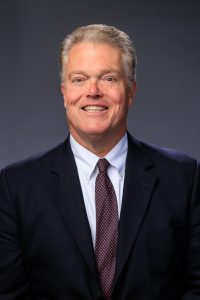
I am grateful for the confidence The Philadelphia Society has placed in me as President, and I look forward to serving in a time when serious thought, honest but vigorous discussion, and real intellectual fellowship are hard to come by. Our group has played a distinctive role in American intellectual life, gathering conservatives, classical liberals, and anyone else who concerned with liberty, order, morality, and constitutional self-government.
My own journey, like that of many of our members, has been indirect. I grew up on an orange farm in rural central Florida. My parents were both farm folks; college had not been an option for them. I wanted to go to the University of Florida and party with my friends, but my parents saw through that brilliant plan and sent me to Davidson, which was much more like a monastery.
Davidson’s great books program changed my life and set me on a path to think about the problem of the origins and survival of nations. In graduate school, I worked with Douglass North and Barry Weingast, who took an “institutionalist” approach to economics. Teaching at Dartmouth, Texas, North Carolina, and now Duke, I have worked on problems of governance and human thriving from a “Public Choice” perspective. Serving as President of Public Choice, and editing the Public Choice journal for years, I have come to think more critically about optimistic political nostrums and progressive quick fixes. Rules, and traditions, matter more that intellectuals think they should. I have tried throughout my professional life to explain why.
As a teacher, I have learned that easy discussions can be good, but that the really good conversations are rarely easy. Students do not learn much from being surrounded only by people who already agree with them. Nor do they learn from being shouted down. They learn when they are challenged, when they are forced to clarify what they think, and when they see that serious disagreement from a well-informed interlocutor can be illuminating rather than threatening. That is true in a classroom, and it is true in our Society.
I also want to emphasize something else: the Society must be a place where younger members are not merely welcomed, but drawn in. One of the best things about The Philadelphia Society is that it gives younger scholars and students a chance to see serious intellectual life modeled at a high level. They can see that argument is not the same thing as animosity, and that one can be principled without becoming rigid. If we do that well, then we are not simply holding meetings. We are helping to form the next generation of thinkers and leaders. There is no audience; we are all participants here.
No president does this work alone, of course. The Society has been fortunate over many years in its officers, trustees, past presidents, and staff. Their devotion, steadiness, and judgment have preserved something genuinely unusual and valuable. Institutions do not sustain themselves, and this one certainly has not done so by accident. I am grateful for the work that has brought us to this point, and for the opportunity to build on it.
I look forward to seeing you at our meetings in the coming year. I will do my best to serve the Society faithfully, and I hope you will continue to lend it your support, your energy, and your voice.
Sincerely,
Michael C. Munger
President, 2026-27